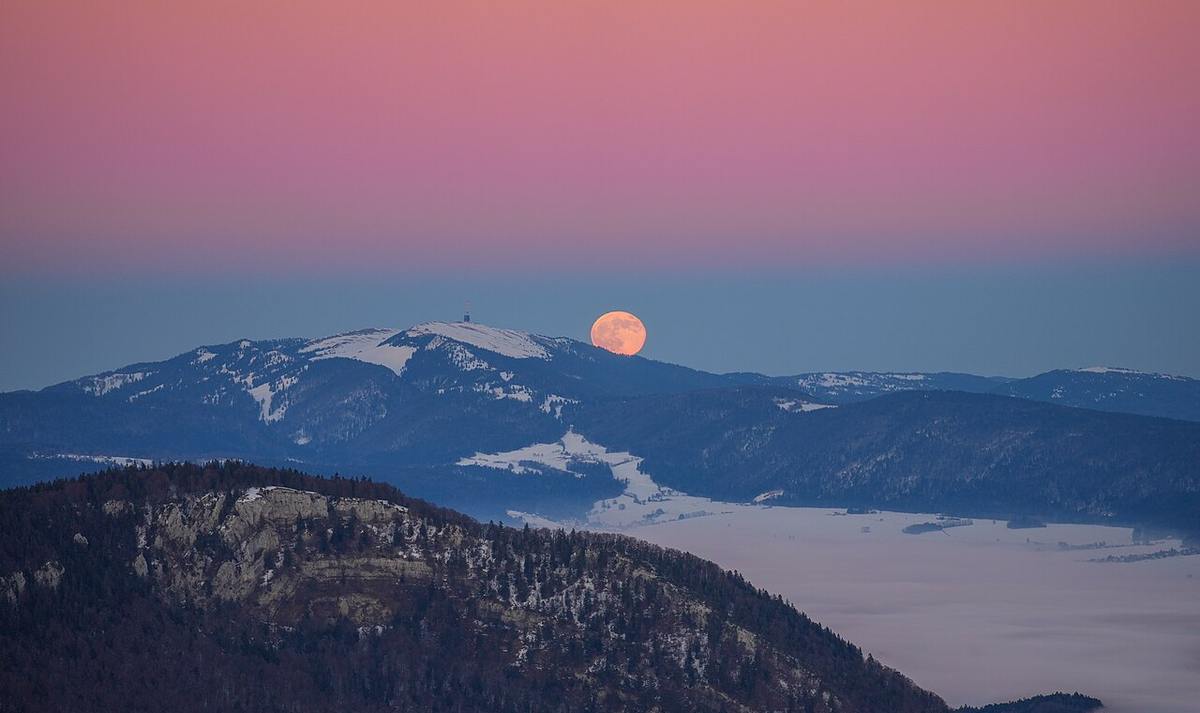
July’s full moon peaks tomorrow — at half past ten in the morning, Eastern time, when nobody in America can see it. That is not a problem if you know when to look instead.
The Exact Timing
| Peak illumination | Wednesday, July 29 — 10:36 a.m. EDT |
| Name | Buck Moon |
| Zodiac | Aquarius |
| Best viewing | Moonrise, Tuesday and Wednesday evening — southeast, just after sunset |
Why the “Peak” Time Barely Matters
Peak illumination is an astronomical instant, not a viewing window. At 10:36 a.m. Eastern the moon is below the horizon for the United States — and to the eye, the moon looks essentially full for a night either side anyway.
The moment worth planning for is moonrise: catch it low in the southeast just after sunset on Tuesday or Wednesday evening, when the well-known “moon illusion” makes it appear enormous against buildings and hills. Local moonrise time varies by city — any weather app lists it.
Why “Buck Moon”
The traditional July name comes from the time of year when male deer — bucks — are regrowing their antlers. Every month’s full moon carries an old seasonal name of this kind; they are folk calendar labels, not astronomical terms.
The Aquarius Angle
This full moon falls in Aquarius, which is why astrology sites are busy this week — Aquarius full moons are read as themes of community, detachment and the bigger picture opposite Leo’s self-focus. Whether that means anything is your call; the astronomy above works either way.
Next Month Is the One to Circle
The Sturgeon Moon peaks at 12:18 a.m. EDT on Friday, August 28 — Thursday evening, August 27, for most of North America — and it arrives with a deep partial lunar eclipse. A visibly darkened moon is a far rarer sight than any named full moon, so if you enjoy tomorrow’s, that is the follow-up.
Frequently Asked Questions (FAQ)
What time is the full moon in July 2026?
Wednesday, July 29 at 10:36 a.m. EDT — but the best viewing is at moonrise Tuesday or Wednesday evening.
What is it called?
The Buck Moon, and it falls in Aquarius.
When is the next full moon?
The Sturgeon Moon, peaking August 28 at 12:18 a.m. EDT — with a deep partial lunar eclipse.
Do I need a telescope?
No — the naked eye at moonrise is the whole show.
Peak times per ABC News/GMA, Star Walk and astronomy calendars; August eclipse per published 2026 lunar calendars. Moonrise times vary by location. Photo: a full moon rising at sunset by Giles Laurent, CC BY-SA 4.0, via Wikimedia Commons.