
Breaking — Sunday, July 19, 2026: Oklahoma City have traded Lu Dort to the Atlanta Hawks in a three-team deal also involving the Dallas Mavericks, with former number one pick Zaccharie Risacher heading to Dallas. Reported by ESPN, The New York Times, Yahoo Sports and Sportsnet within minutes of each other. Full pick compensation has not yet been detailed.
The first question after any trade like this is the same one: what is he actually owed? Because with Oklahoma City this summer, the contract is the story.
Lu Dort's Contract, Exactly
- Deal: five years, $82.5 million with the Thunder
- Average annual value: about $16.5 million
- 2026-27 base salary: $17,722,222
- Structure: the final year was a team option — $17.7m — and Oklahoma City exercised it
That last line is the part worth sitting with. The Thunder had a clean, costless exit from this contract. They chose not to take it, picked the option up, and have now traded him instead.
That is not a contradiction. A player on a guaranteed $17.7m deal is a tradeable asset — salary that can be matched in a deal and turned into picks. A player whose option you decline is simply gone, and you get nothing. Picking it up kept the asset alive long enough to convert it.
Why Oklahoma City Traded Him: The Second Apron
Dort has spent all seven seasons of his career in Oklahoma City. He arrived undrafted and turned himself into exactly the kind of defensive wing a contender wants. On basketball terms alone, there is no case for moving him.
The case is financial, and it is severe. The Thunder were projected to carry roughly $390 million in total roster expenses and sat about $18.8 million above the NBA's second apron.
The second apron is not just an expensive place to be — it is a restrictive one. Teams above it:
- cannot use the mid-level exception
- cannot send or receive cash in trades
- cannot aggregate salaries to match money in a trade
- cannot complete sign-and-trade deals
- cannot use trade exceptions generated in previous years
- face restrictions on signing buyout players
- and, if they stay there three seasons out of five, have their first-round pick moved to the end of the first round
That last penalty is the one that changes behaviour. It does not cost a team money; it costs them the future.
He Is the Third One Out, Not the First
This did not come from nowhere. Oklahoma City have been shedding salary all summer:
- Isaiah Joe → Detroit Pistons, for two future second-round picks — reportedly cutting around $76 million from the tax penalty
- Aaron Wiggins → Atlanta Hawks — which, with the Joe deal, was reported to have trimmed roughly $150 million in total tax burden
- Lu Dort → Atlanta Hawks, now
All three were rotation players. None were part of the young core the franchise is built around. That is the shape of a second-apron summer: the stars stay, and everyone useful around them becomes a maths problem.
What Atlanta and Dallas Get
Atlanta add a proven perimeter defender on an expiring-style number, plus draft capital in the same deal — and they had already taken Wiggins from the same team weeks earlier.
Dallas get Zaccharie Risacher, the former number one overall pick, which is the headline the Mavericks will care about.
Exact pick compensation had not been fully reported at the time of writing.
Frequently Asked Questions (FAQ)
What is Lu Dort's contract worth?
Five years, $82.5 million in total (about $16.5m a year). His 2026-27 base salary is $17,722,222, from a team option the Thunder picked up.
Why did the Thunder trade Lu Dort?
To get under the second apron. OKC were roughly $18.8m above it with about $390m in roster costs. It was a payroll decision, not a basketball one.
If they wanted to cut salary, why pick up his option first?
Because declining it returns nothing. Keeping him on a guaranteed $17.7m contract made him tradeable salary that could be converted into picks — which is what happened.
Which teams are in the Lu Dort trade?
Three: Oklahoma City, Atlanta and Dallas. Dort goes to the Hawks; Zaccharie Risacher goes to the Mavericks.
How long was Dort in Oklahoma City?
All seven seasons of his NBA career, having entered the league undrafted.
What is the NBA second apron in simple terms?
A spending line above the luxury tax that removes a team's roster-building tools — no mid-level exception, no cash in trades, no salary aggregation, no sign-and-trades — and eventually pushes their first-round pick to the back of the round.
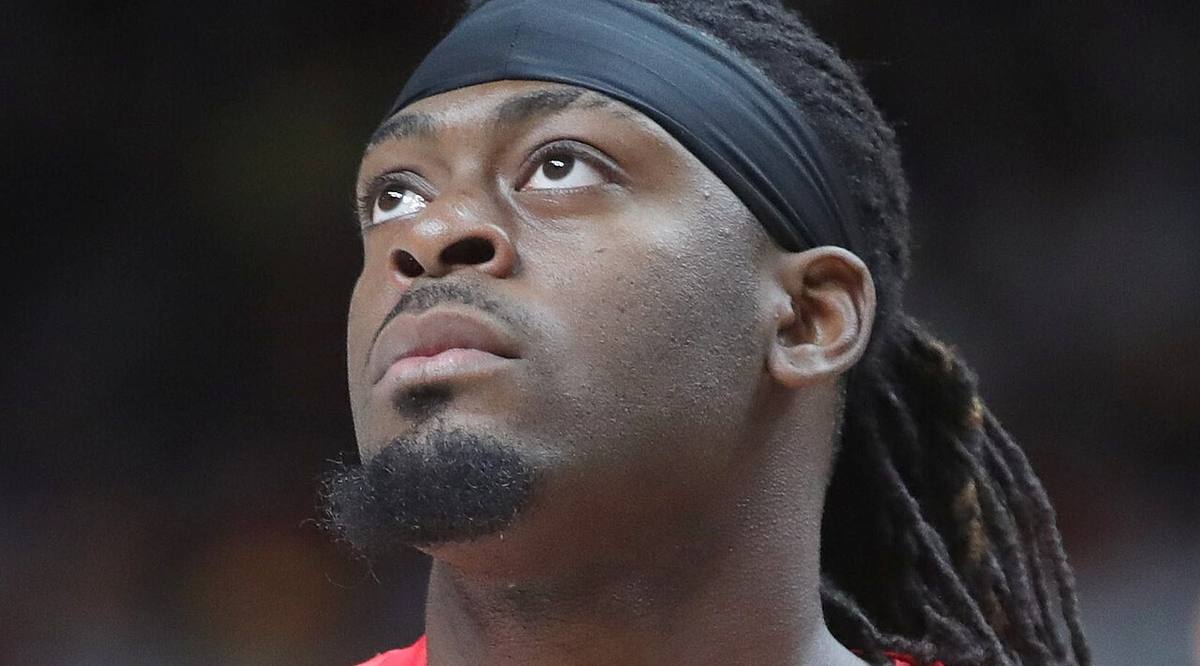
Trade reported July 19, 2026 by ESPN, The New York Times, Yahoo Sports, Sportsnet and Sporting News; terms may change as details are confirmed. Contract figures per Spotrac and ESPN reporting on the option decision; payroll and apron figures per published Thunder cap analysis. Photo: Luguentz Dort by Sandro Halank, CC BY-SA 4.0, via Wikimedia Commons.