

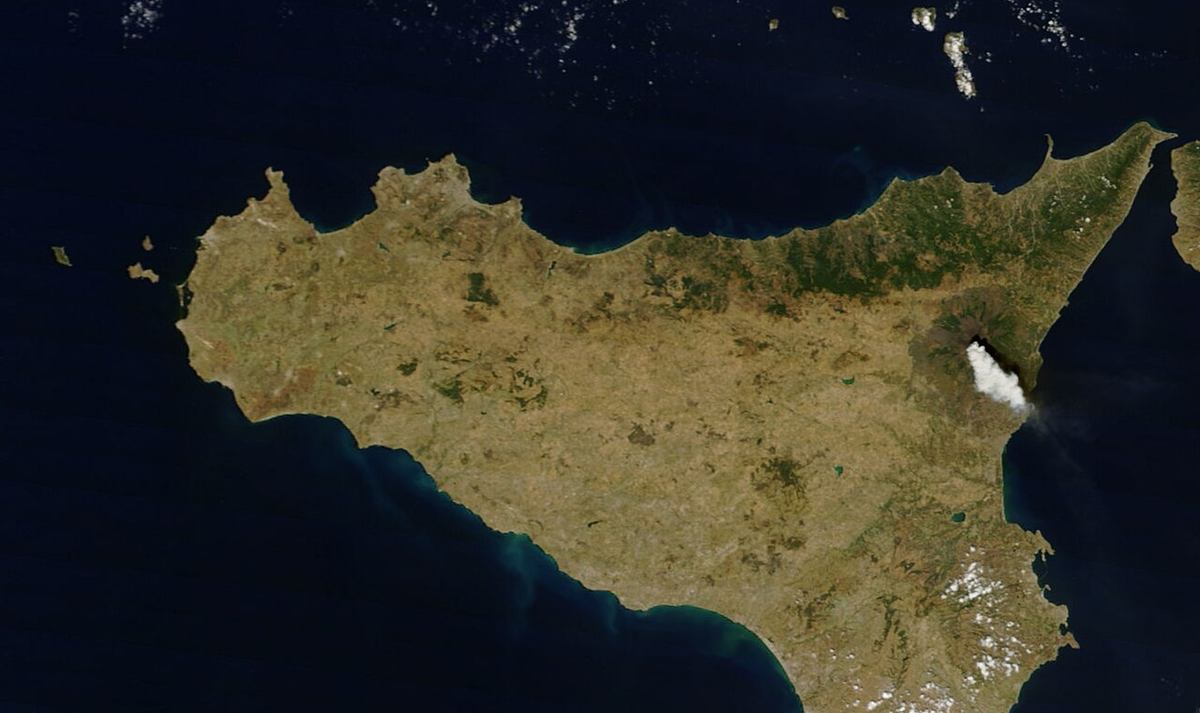
Mount Etna has been in an eruptive phase since early August, feeding lava flows from vents at roughly 2,750 and 2,360 metres and pushing an ash cloud that has reached Malta and as far as Libya. The aviation alert has been at red, the highest level.
The practical result is at Catania–Fontanarossa, Sicily’s busiest airport, which has been closing and reopening as the wind moves the plume. Around 700 flights have been lost. Between 6 and 12 August, more than a third of the airport’s 1,974 scheduled flights were cancelled and roughly 630 were diverted. It is described as the worst disruption Catania has faced in at least two decades.
If you are one of the people this happened to, the useful part of this story is not the volcano. It is a distinction that decides what you can ask for — and airlines are not in the habit of explaining it.
The rule everybody half-remembers
EU Regulation 261/2004 is the one people mean when they say “you get compensation”. It sets fixed payouts of €250 to €600 depending on distance, and it is genuinely generous.
It also has an exception for extraordinary circumstances — events outside the airline’s control. Volcanic ash is the textbook example. So on this occasion the payout does not apply, and an airline telling you that is telling you the truth.
What is left unsaid is that EU261 contains three separate entitlements, and the exception only cancels one of them.
What the exception does and does not switch off
| Entitlement | During volcanic ash |
|---|---|
| Fixed compensation (€250–€600) | Not payable |
| Refund or re-routing, your choice | Still applies |
| Duty of care — meals, hotel, transport, communication | Still applies |
Two of the three survive. In a disruption measured in days rather than hours, the two that survive are worth considerably more than the one that does not.
The 2013 ruling that settled the argument
This was tested after the 2010 Eyjafjallajökull eruption in Iceland, which closed most of European airspace. A passenger stranded for a week claimed the cost of her meals and accommodation. The airline argued that an event on that scale was so exceptional that it should be released from the duty of care entirely — a category it described as super extraordinary circumstances.
In January 2013, the Court of Justice of the European Union rejected that argument. There is no such category. And it held that EU law imposes no temporal or monetary limit on the duty of care.
Which is the part worth carrying: the longer the closure lasts, the larger that obligation gets, not the smaller.
What to do, in order. 1) Ask the airline in writing for care — hotel and meals — and for re-routing or a refund, and state which you want. 2) If nobody books anything, book something reasonable yourself and keep every receipt, plus the boarding pass and the cancellation notice. 3) Claim it back from the airline in writing afterwards. 4) Do not accept vouchers in place of a refund unless you want the voucher; the refund is your right and it is payable in money. 5) Check Palermo for re-routing — it has been operating normally throughout.
Who is covered
EU261 applies to any flight departing from an EU airport, whichever airline operates it, and to flights arriving in the EU on an EU carrier. A flight out of Catania is covered no matter who you booked with. Airlines named as affected include Ryanair, easyJet, ITA Airways and Wizz Air.
Travel insurance sits on top of this rather than replacing it. Most policies will ask what the airline provided first, so claiming from the airline is usually the step that has to happen anyway.
On checking the airport’s status
Because the closures depend on which way the wind is carrying the ash, the situation has changed within single days — arrivals suspended on 10 August, further closure extended through the afternoon of 15 August. Any status you read that is more than a few hours old is not information. The airport’s own page and your airline are the only two sources worth checking, and they are worth checking again before you leave for the airport.
Details of the eruption — the eruptive phase from vents at approximately 2,750 m and 2,360 m, the red aviation alert, ash reaching Malta and Libya, the suspension of arrivals at Catania–Fontanarossa on 10 August, closure extended through 2pm local time on 15 August, around 700 flights lost, more than a third of 1,974 scheduled flights cancelled between 6 and 12 August with roughly 630 diverted, the characterisation as the worst disruption in at least two decades, the airlines affected, and Palermo continuing to operate — were reported by Al Jazeera, Euronews, RTE, The Watchers and Aerotime between 8 and 15 August 2026. The passenger-rights position is based on Regulation (EC) No 261/2004 and the Court of Justice of the European Union judgment in Case C-12/11, McDonagh v Ryanair, delivered 31 January 2013, which held that volcanic ash constitutes extraordinary circumstances, that no category of super extraordinary circumstances exists, and that there is no temporal or monetary limitation on the obligation to provide care. This is general information rather than legal advice; entitlements depend on your specific booking and route, and the airport situation changes daily.
Frequently Asked Questions (FAQ)
Is Catania airport open?
It has been closing and reopening in stages as the ash drifts. Arrivals were suspended on 10 August, and flights were reported suspended through 2pm local time on 15 August. Because it depends on wind direction, the only reliable source is the airport’s own status page and your airline — a status from yesterday tells you nothing.
Do I get compensation for a flight cancelled by volcanic ash?
No. Volcanic ash is treated as an extraordinary circumstance under EU Regulation 261/2004, which removes the fixed cash payout of €250 to €600. That part of the rule is genuinely switched off.
So what am I actually entitled to?
Two things. First, a choice between a full refund and re-routing to your destination. Second, care while you wait — meals and refreshments in proportion to the delay, hotel accommodation if you need to stay overnight, transport to and from it, and two phone calls or emails. Care applies even in extraordinary circumstances.
Is there a limit on the hotel and meals?
No. The Court of Justice of the European Union ruled in 2013, in a case arising from the 2010 Icelandic ash cloud, that there is no time limit and no monetary ceiling on the duty of care. The court also rejected the argument that an unusually severe event creates a category exempting airlines from that duty altogether.
Which flights are covered by these rules?
Any flight departing from an airport in the EU, whatever the airline, and any flight arriving in the EU on an EU carrier. A flight leaving Catania is covered regardless of who you booked with.
What if the airline will not book me a hotel?
Keep the receipts. Book something reasonable yourself, keep the boarding pass, the cancellation notice and every receipt, and claim it back in writing. Reasonable is the operative word — the duty covers necessary care, not an upgrade.