
Two things are true and they pull in opposite directions. Almost every spider in the United States is harmless to you — and a very small number can genuinely put you in hospital.
The Three That Matter
Per the Cleveland Clinic, black widows, brown recluses and hobo spiders are the only medically significant spiders in America. Everything else is, in practice, a nuisance.
| Spider | How the bite behaves |
|---|---|
| Black widow | Immediate sharp, pinprick-like pain, then numbness. Muscle cramps in the stomach, shoulders, chest or back; excessive sweating; nausea and vomiting; severe headache; skin rash; difficulty breathing. |
| Brown recluse | Pain arrives gradually, roughly an hour after. A blister surrounded by bruising or reddened skin — the bulls-eye — which may ulcerate and scar. Itching locally or all over. |
| Hobo spider | Rarely hurts at the time. A severe headache starts within minutes or hours and can last up to a week. Hardened skin, blisters with pus, fatigue, nausea, memory problems. |
The Timing Is the Tell
If you remember one thing, make it this: the three bites announce themselves on completely different clocks.
- Instant sharp pain → consistent with a black widow.
- Nothing, then pain building over an hour → consistent with a brown recluse.
- Nothing, then a brutal headache → consistent with a hobo spider.
That timeline is often more useful to a clinician than trying to describe a spider you barely saw.
Most “Spider Bites” Are Not Spider Bites
This is the part that surprises people. Experts do not actually know how many spider bites happen each year, because most of the time you would not know a spider bit you.
Plenty of red, swollen, painful lumps that get labelled “spider bite” are something else — commonly a bacterial skin infection. That matters practically: an infection needs treating as an infection, and a self-diagnosis of “just a spider bite” is how people wait too long.
First Aid — and the Step to Never Take
- Clean it with soap and water.
- Cold compress on the area.
- Elevate the limb if you can.
- Antihistamines and over-the-counter pain relief as appropriate.
When to Stop Managing It at Home
Seek immediate care for difficulty breathing, heart problems, severe muscle pain, or signs of infection. A suspected black widow or brown recluse bite is itself a reason to be seen rather than to wait and watch.
Frequently Asked Questions (FAQ)
Which spiders in the US are actually dangerous?
Only black widows, brown recluses and hobo spiders are medically significant.
How many people die from spider bites?
Fewer than three a year in the US, most of them children.
How do I tell a brown recluse bite from a black widow bite?
By timing: black widow pain is immediate and sharp; brown recluse pain builds over about an hour and can form a bulls-eye blister.
Should I try to suck out the venom?
No — never.
When should I go to the emergency room?
Difficulty breathing, heart problems, severe muscle pain or signs of infection — go immediately.
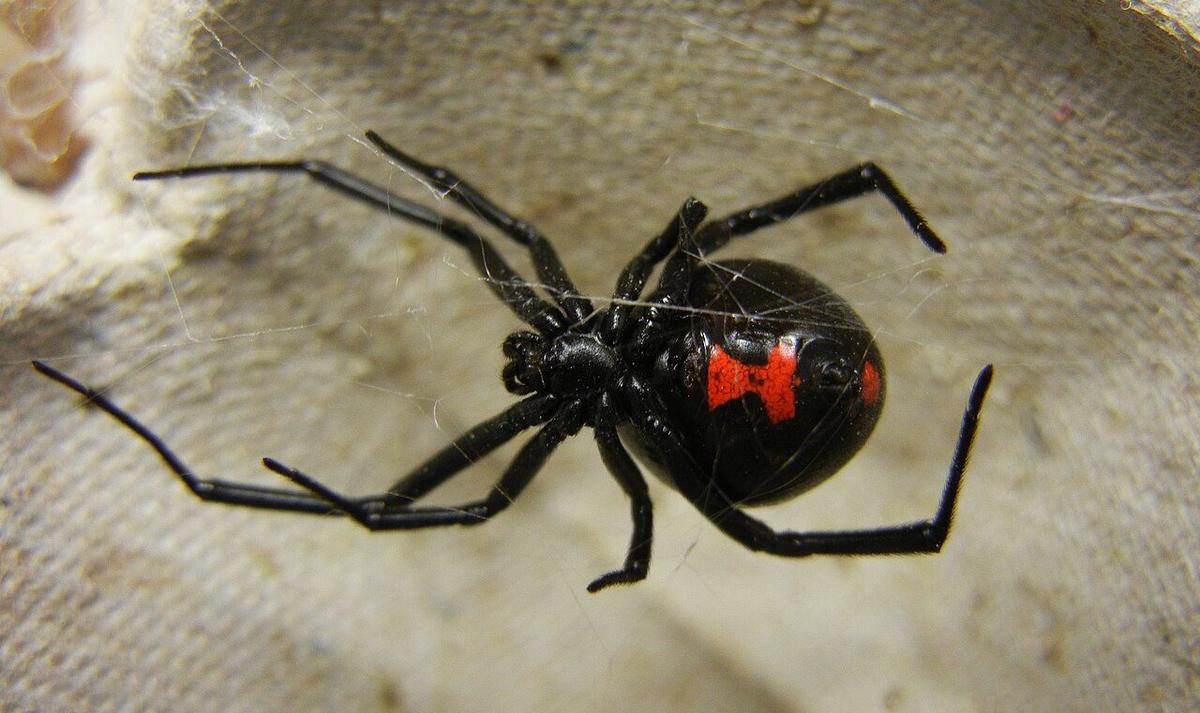
Species list, symptom descriptions, fatality figure and first-aid guidance per the Cleveland Clinic health library, with supporting detail from Johns Hopkins Medicine and Cedars-Sinai, 2026. General information only — not a substitute for professional medical care. Photo: adult female black widow (CC BY-SA, Wikimedia Commons).