

Joe Amabile posted on 12 August 2026 to say that the tumour removed from his brain a week earlier was a very low grade astrocytoma, that surgeons took all of it, and that his prognosis is fairly good. He also said that because it was malignant, he expects to take a pill for the rest of his life.
That is his news and it is, on its own terms, about as good as this kind of news gets.
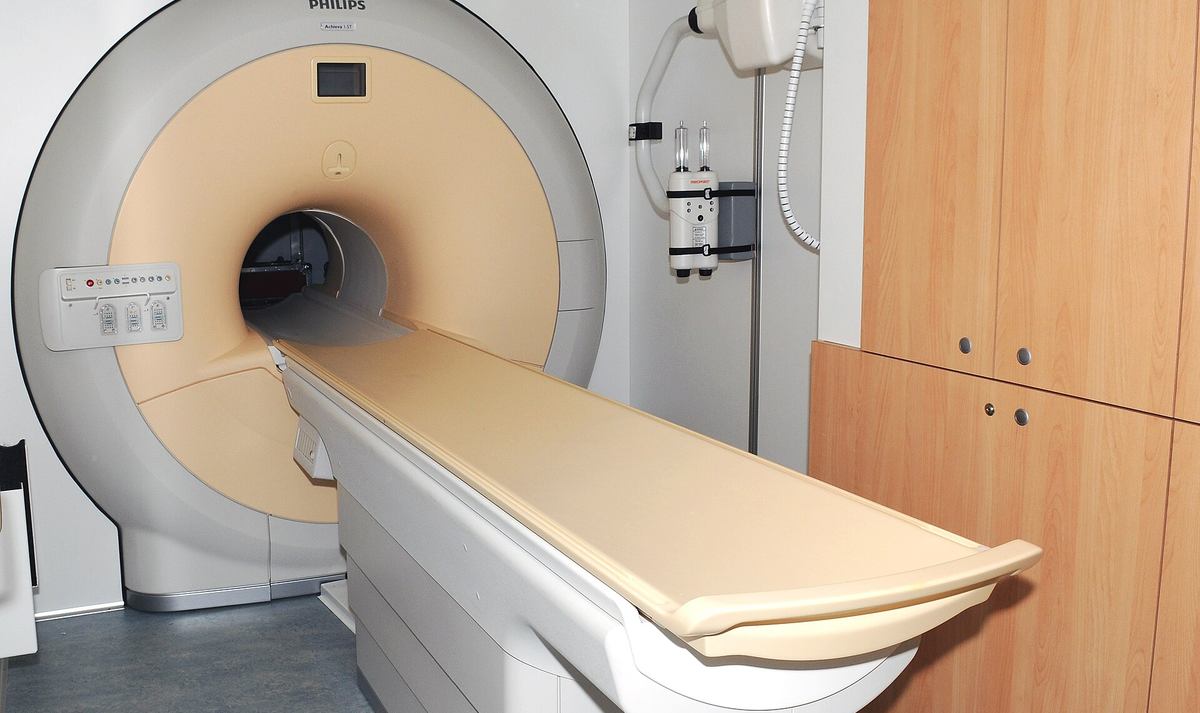
The reason it is being discussed well beyond Bachelor audiences is the sentence before it: he had no symptoms. The tumour turned up on an elective whole-body MRI he chose to have — the kind of scan the profession has spent several years advising against.
What happened, in order
| July 2026 | An elective whole-body MRI (a Prenuvo scan) shows what appears to be an early-stage brain tumour |
| 5 August | Craniotomy — to remove it and to establish whether it was cancerous |
| 12 August | He announces the result: very low grade astrocytoma, fully removed, prognosis fairly good, lifelong medication |
“Low grade” is doing most of the work in that sentence
An astrocytoma grows from astrocytes, support cells in the brain. What matters clinically is not the name but the grade — an assessment of how abnormal and how aggressive the cells look under a microscope.
The distance between the low and high end of that scale is enormous. Two people can be told they have an astrocytoma and be facing situations with very little in common. This is why a headline saying “brain tumour” conveys almost nothing on its own, and why the phrase he actually used — very low grade — is the informative part.
Malignant and low grade are not contradictory. This trips almost everyone up. Malignant describes the nature of the cells — whether they can invade surrounding tissue rather than sit in a capsule. Grade describes how fast and how aggressively they are doing it. So “malignant, very low grade, fully removed, fairly good prognosis” is a coherent set of statements, not a mixed message. It also explains the lifelong medication: a cell type that can return is monitored and treated indefinitely, even after a complete removal.
The part that will get argued about
Direct-to-consumer whole-body MRI has grown quickly. The pitch is straightforward and emotionally powerful: scan a healthy person, catch something early, act before symptoms.
The American College of Radiology does not recommend it for average-risk, asymptomatic adults. Its stated reasons are that there is no evidence it extends life, that it has not been shown to be cost-effective, and that it generates a large volume of non-specific findings that lead to further testing.
The numbers behind that position are the useful part:
| 1–2% | Share of asymptomatic people in whom whole-body MRI detects cancer |
| 30.3% | Participants with at least one incidental finding, in a study of 3,371 people |
| 62.1% | Of those who went on to biopsy, the share that showed no malignancy |
Both things are true at once
It is tempting to read Amabile’s case as settling the argument. It does not, and the reason is worth understanding rather than glossing over.
A screening test is judged on what happens across everyone who takes it, not on the person it helped. In his case the scan found something real, early, and operable. In most cases it finds something ambiguous that turns out to be nothing — after a period of fear, a biopsy, and a bill. Both of those are the same test behaving exactly as its statistics predict.
What his case genuinely does demonstrate is that the 1–2% is a real number containing real people, which is easy to forget when it is written as a percentage. What it cannot tell you is whether you are in it.
The reasonable takeaway
If a story like this makes you want to book a scan, the more useful first step is a conversation with a doctor about your own risk — family history, symptoms, existing conditions. Guidelines are written for average risk, and the point of that conversation is to find out whether you are average.
The scans that do have strong evidence behind them are the boring, targeted, age-based ones. They are less dramatic than a full-body MRI and they are the ones with decades of data showing they save lives.
Joe Amabile’s statements — the very low grade astrocytoma diagnosis, the craniotomy on 5 August 2026, complete removal of the tumour, a prognosis he described as fairly good, lifelong medication because the tumour was malignant, difficulty speaking and pain after surgery, and the discovery of the tumour via an elective Prenuvo whole-body MRI following his July 2026 disclosure — were reported by Parade, Bachelor Nation and Reality Tea on and around 12 August 2026. The position that the American College of Radiology does not recommend whole-body screening MRI for average-risk asymptomatic adults, and the figures on detection and incidental findings including the study of 3,371 participants, are drawn from published summaries of the professional guidance and research literature. This article is general information about how tumour grading and screening tests work; it is not medical advice and cannot describe any individual case. Anyone concerned about symptoms or considering elective screening should speak to a doctor about their own risk.
Frequently Asked Questions (FAQ)
What did Joe Amabile say about his diagnosis?
In an Instagram video posted on 12 August 2026 he said he was diagnosed with a very low grade astrocytoma, that surgeons removed the entire tumour, and that his prognosis is fairly good. Because it was malignant, he said he will take a pill for the rest of his life.
When was his surgery?
He underwent a craniotomy on Wednesday 5 August 2026, both to remove the tumour and to determine whether it was cancerous. He described difficulty speaking and significant pain afterwards.
How was the tumour found?
On a Prenuvo scan — an elective whole-body MRI he chose to have, not one ordered for symptoms. He said in July that doctors had found what appeared to be an early-stage brain tumour as a result.
What is an astrocytoma?
A tumour arising from astrocytes, a type of support cell in the brain. They are graded by how aggressive the cells look under a microscope, and that grade — far more than the word “tumour” — is what determines how the illness behaves.
Can something be malignant and low grade at the same time?
Yes, and it is one of the most confusing points in this area. Malignant describes the type of cell and its capacity to invade surrounding tissue. Low grade describes how quickly it is doing so. The two words answer different questions.
Should I book a full-body MRI?
That is a conversation for your own doctor, and the honest position is that the guidelines do not support it for average-risk adults without symptoms. The American College of Radiology does not recommend it, citing a lack of evidence that it extends life and the volume of incidental findings it produces.