
Two numbers came out this morning that a lot of people are going to read as a typo.
| Payrolls, July | −23,000 — a fall |
| What economists expected | a gain of roughly 80,000–95,000 |
| Unemployment rate | 4.1%, down from 4.2% |
| June, revised | down to 20,000 |
Fewer jobs, and less unemployment. Both are correct. Here is why.
It Is Two Reports Wearing One Headline
The monthly employment report is not one measurement. It is two completely separate surveys, published together, asking different people different questions.
| Establishment survey | Household survey | |
| Who is asked | Employers | Households |
| What it produces | The payroll number — the −23,000 | The unemployment rate — the 4.1% |
| What it counts | Jobs. Two jobs, two counts. | People. Two jobs, one person. |
That last row alone can push the two apart. Someone who loses a second job is a payroll loss and not an unemployed person.
The Definition That Does the Real Work
To be counted as unemployed, you must be two things at once: without a job, and actively looking for one.
So a rate that drops in a month when payrolls also drop is not a puzzle. It is a description of an economy where fewer people are on payrolls and fewer people are actively hunting. Whether that is good news depends entirely on which of those is doing the work — and the headline number cannot tell you.
Why the Numbers Change After You Read Them
Notice the June line in the table: revised down to 20,000.
Every month’s payroll figure is published before all the data is in, and then revised twice in the two months that follow as late responses arrive and seasonal adjustments are refined. The number you argued about on a Friday is very often not the number that ends up in the record.
Through 2026 those revisions have mostly gone in one direction: downward. It is worth holding any single month lightly, in both directions.
What This Month Actually Tells You
Stripping out the noise, three things are defensible from this report:
- Hiring is not merely slowing, it went backwards in July. Missing a forecast by 100,000-plus is not a rounding error.
- The unemployment rate is a poor single summary right now. When payrolls and the rate move the same way, the rate is being pushed by participation as much as by hiring.
- June was weaker than reported at the time. Which is a reminder that July may be too.
Frequently Asked Questions (FAQ)
How can unemployment fall when jobs were lost?
They are measured by two different surveys. Payrolls come from employers; the unemployment rate comes from households. And the rate only counts people still actively looking — people who stop looking leave the labour force and stop being counted.
What did the July jobs report say?
Payrolls fell 23,000 against expectations of a gain of roughly 80,000–95,000. The unemployment rate fell to 4.1%. June was revised down to 20,000.
What is the difference between the household and establishment surveys?
The establishment survey asks businesses and counts jobs. The household survey asks people and counts people. One person with two jobs is two payroll counts but one employed person.
Why does the jobs report get revised?
It is published before all responses are in. Each month is revised twice over the following two months as late data arrives and seasonal adjustments are updated.
Does leaving the labour force lower the unemployment rate?
Yes. You are only unemployed if you are jobless and actively looking. Stop looking and you are counted as out of the labour force, which pushes the rate down.
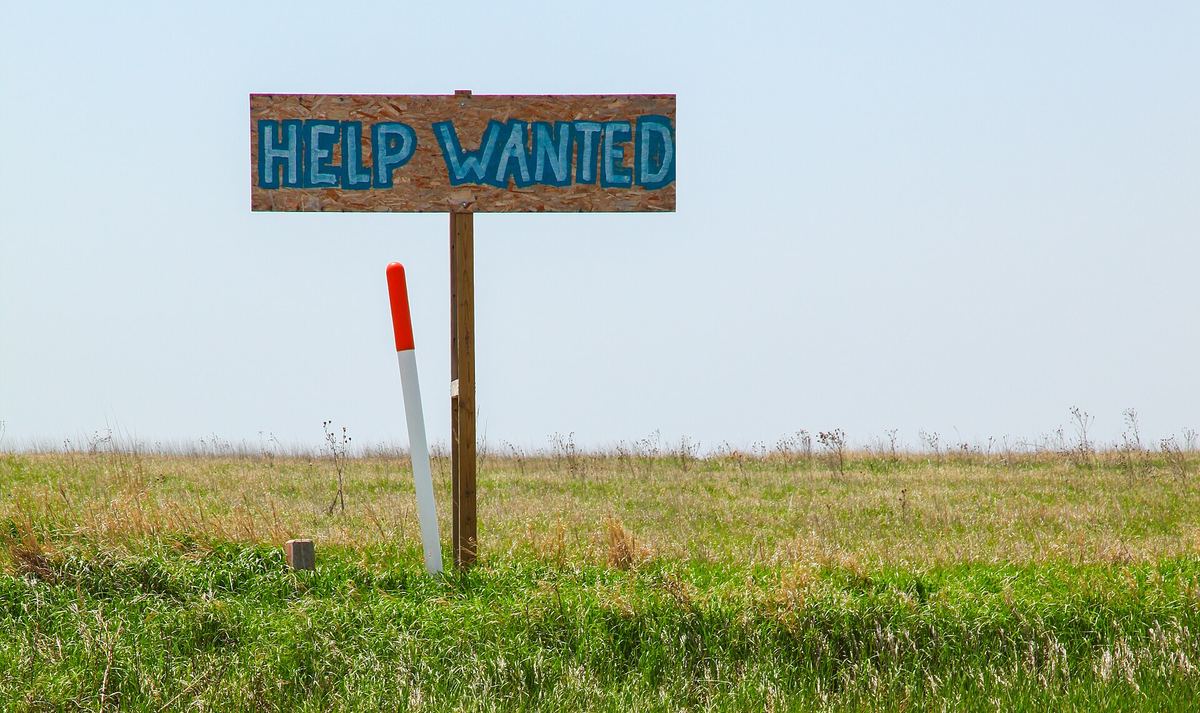
July payroll change, the unemployment rate, the revised June figure and economists’ consensus expectations per the Bureau of Labor Statistics employment situation release of 8:30am ET on 7 August 2026 as reported by Yahoo Finance, CNBC and NBC News. Expectation ranges differ between outlets because they poll different panels of economists. Descriptions of the establishment and household surveys, the definition of unemployment and the revision schedule reflect standard BLS methodology. Figures for the current month are preliminary and subject to revision. Photo: a Help Wanted sign in Nebraska by Bradley Weber, CC BY 2.0 via Wikimedia Commons, cropped.