
Put “abolish the income tax” on a ballot and you would expect it to sail through. Missouri did exactly that on 4 August 2026, and 83% of voters said no.
The margin is the story. So is the reason.
The Result
| No | 83% — 227,815 votes |
| Yes | 16% — 43,784 votes |
| Called by AP | 8:15 p.m., with 18.1% counted |
A race called at 18% counted is a race that was never close.
What Amendment 5 Actually Did
Most coverage described it as ending the income tax. That was half of it.
- Phase out the individual income tax. The legislature would have had five years to enact a plan, with the top rate cut in steps tied to revenue growth from other sources.
- Expand what can be taxed. Lawmakers would have been authorised to raise existing sales and use taxes and to tax goods and services that state law and the constitution do not currently allow — the widely cited example being services such as haircuts.
- Lock the door behind it. Once eliminated, no version of an income tax could be reinstated without another constitutional amendment.
Why That Distinction Moved Voters
Income tax and sales tax fall on people very differently. Income tax rises with what you earn. Sales tax is charged on what you buy, at the same rate regardless of income — so it takes a larger share of a smaller paycheque.
Scott Charton, spokesperson for the No On 5 campaign, put the case plainly:
“a tax shift from income tax paid by the wealthiest, and it’s going to raise the sales tax and expand the sales tax base.”
The Schools Argument
The other organised opposition came from education. The Missouri School Boards’ Association circulated a model resolution for districts warning that the amendment
“raises significant questions regarding the long-term stability of Foundation Formula funding and the district’s ability to fulfill its constitutional and educational mission.”
When school boards across a state pass the same resolution, that reaches voters in a way a policy paper does not.
The Nine States That Really Do Have No Income Tax
The idea itself is not fringe. Nine states levy no broad personal income tax:
Alaska · Florida · Nevada · New Hampshire · South Dakota · Tennessee · Texas · Washington · Wyoming
Two carry asterisks worth knowing:
- New Hampshire never taxed wages, but it did tax interest and dividend income until that tax ended on 1 January 2025.
- Washington does not tax wages, but it does tax large long-term capital gains — 7% above an annual threshold that rises with inflation, and 9.9% on gains above $1 million.
And none of them run on nothing. They lean harder on sales taxes and property taxes — which is precisely the trade Missouri voters were shown, and declined.
Frequently Asked Questions (FAQ)
Did Missouri Amendment 5 pass?
No. It was rejected 83% to 16% on 4 August 2026.
What would Amendment 5 have done?
Phased out the state individual income tax over five years and let lawmakers expand sales and use taxes to goods and services not currently taxable.
Why did voters reject a tax cut?
Because it was a tax swap, not a cut — and opponents argued it moved the burden from the wealthiest onto a broader sales tax.
Which states have no income tax?
Alaska, Florida, Nevada, New Hampshire, South Dakota, Tennessee, Texas, Washington and Wyoming.
Do those states have hidden taxes instead?
They rely more on sales and property taxes. Washington also taxes large long-term capital gains.
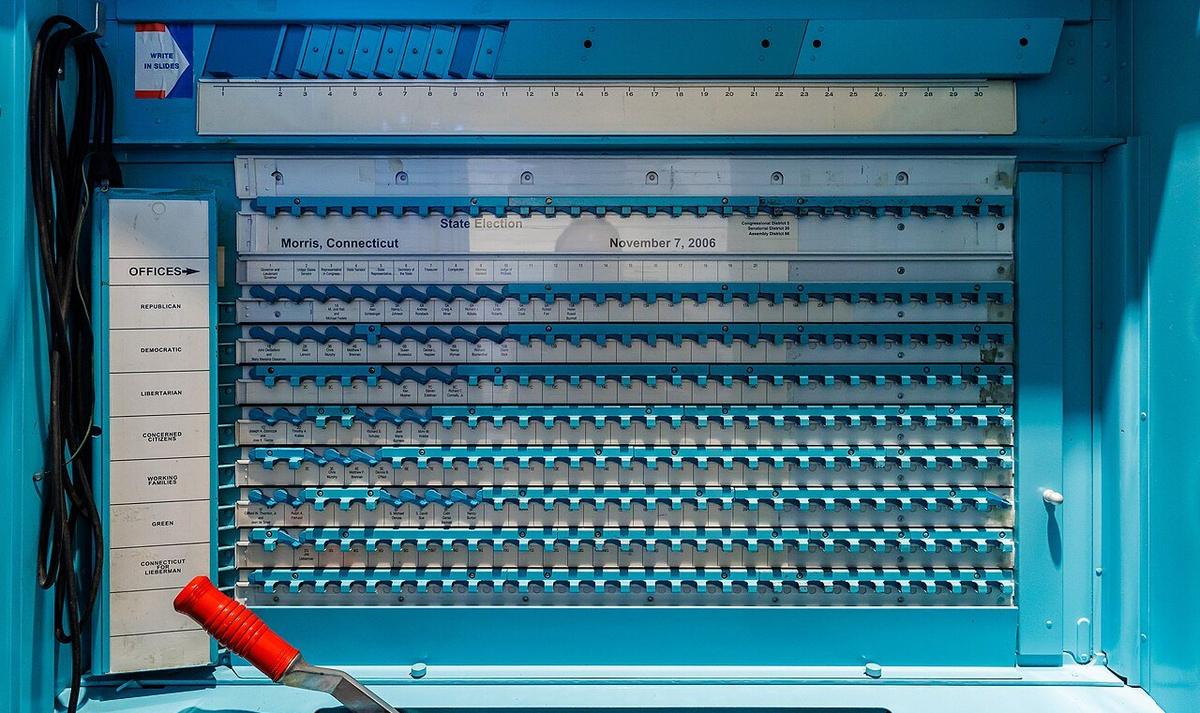
Result figures, ballot mechanics and quotations per KCUR, STLPR, KCTV5, KOMU, KY3 and the Missouri Independent, 4–5 August 2026; opposition analysis per the Missouri Budget Project and ITEP. No-income-tax state list and the New Hampshire and Washington details per current state tax summaries. General information, not tax advice. Photo: a mechanical lever voting machine (CC0) — illustrative, not from this election.