
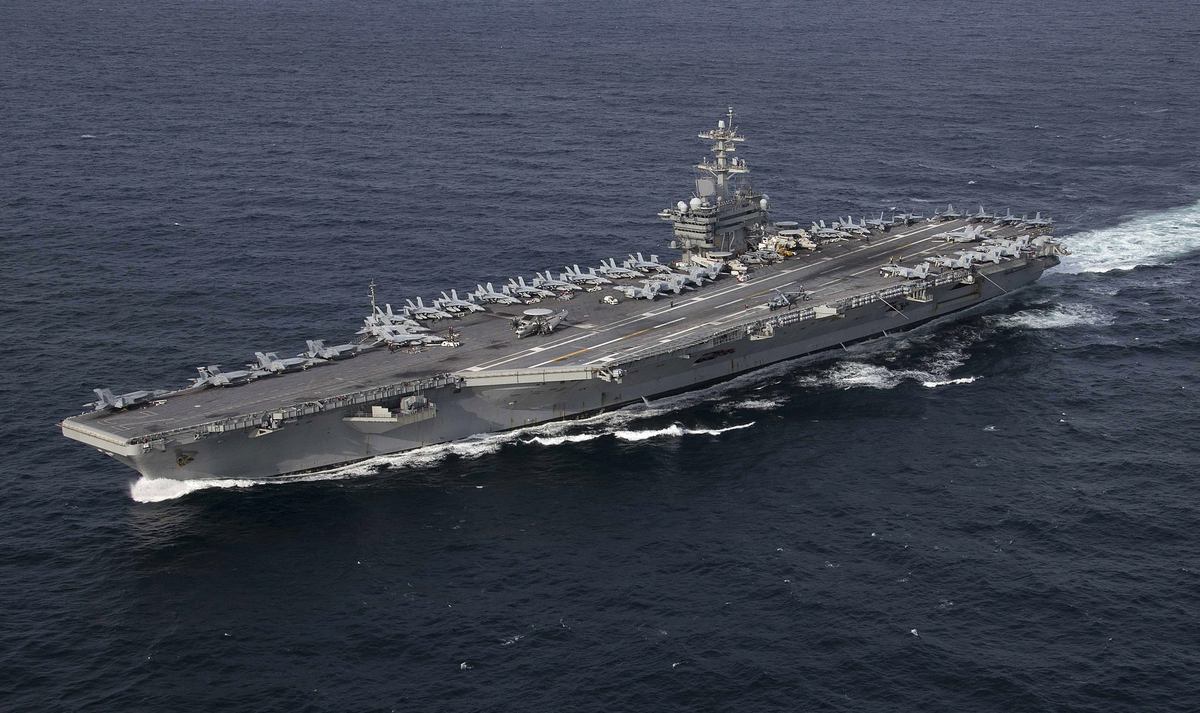
The USS Abraham Lincoln has been continuously at sea for more than 260 days, with a crew of roughly 5,680, as the centrepiece of US operations following the outbreak of the war with Iran in late February 2026.
The headline figure is the length. The figure that actually explains the concern is a different one, and it usually appears in the last paragraph: reporting describes roughly nine months without port visits.
Why port calls are not a perk
It is easy to read “no port visits” as a lifestyle complaint — sailors not getting shore leave. That is not really what it measures.
A port visit is when a great deal of maintenance that cannot be done underway gets done, when supplies and spare parts arrive in bulk rather than by replenishment at sea, when people rotate on and off, when medical and dental care that has been deferred gets handled, and when the crew gets a genuine break from a schedule that otherwise never varies.
Remove them for nine months and the effects compound in several directions at once:
| What a port call normally does | Without one |
|---|---|
| Deferred maintenance gets cleared | It accumulates |
| Bulk resupply and spares | Everything arrives by underway replenishment |
| Crew rotation and leave | The same people, the same routine, indefinitely |
| A visible end point | No fixed horizon |
That last row is the one that shows up as a morale and mental health story. A hard deployment with a known end date is a different psychological problem from a hard deployment that has been extended repeatedly.
What has actually happened this week
Adm. Brad Cooper, who leads US Central Command, visited the ship — reported as his second visit — at the end of a ten-day trip that also included Bahrain, Iraq, Israel, Jordan, Saudi Arabia and the United Arab Emirates.
He described the deployment in these terms: “History will record this deployment as one of the most operationally intense and consequential of the modern era.”
Separately, a second carrier has been reported as heading toward the Middle East following reports of conditions aboard the Lincoln.
A relief carrier is not a switch being flipped. Getting a second carrier into position takes weeks of transit, and the two do not simply swap. There is normally an overlap period, and the relieving ship has to arrive with its own air wing worked up and ready. So “a carrier is on the way” and “the Lincoln goes home soon” are different statements, and only the first has been reported.
The political dimension
President Trump said the Lincoln’s time at sea was “not nearly long enough”, comments reported on 14 August. Lawmakers and military families have been pressing in the other direction, and it is that gap — between the operational argument for keeping a carrier on station and the human cost of doing so — that has turned a deployment length into a national story.
Both positions rest on real considerations. A carrier withdrawn from the Strait of Hormuz is a capability removed during an active conflict. A crew kept at sea past every normal limit is a readiness problem of its own, because exhausted people make mistakes with aircraft and reactors.
What is confirmed and what is not
| Confirmed | The deployment length, the crew size, Cooper’s visit and his quoted remarks, Trump’s comments |
| Reported | Conditions aboard, mental health concerns, the absence of port visits, a relief carrier heading to the region |
| Not announced | A date for the Lincoln’s return |
No return date has been given. Until one is, the deployment record continues to extend by a day every day.
The USS Abraham Lincoln, a Nimitz-class aircraft carrier with a crew of approximately 5,680, has been continuously at sea for more than 260 days as of mid-August 2026, operating in the Arabian Sea, Persian Gulf and Strait of Hormuz following the outbreak of the war with Iran in late February 2026. Adm. Brad Cooper’s visit to the ship, his quoted remark about the deployment, and the ten-day regional trip preceding it were reported by CNN and Political Wire on 15–16 August 2026. Reports of living conditions aboard, crew mental health concerns and a period of roughly nine months without port visits were carried by Time and NPR on 14 August 2026, as was the report of a second carrier heading toward the Middle East. President Trump’s comment that the deployment was “not nearly long enough” was reported by The Washington Post and Spectrum News on 14 August 2026. The explanation of what port visits provide is general background on naval operations. No return date for the Lincoln had been announced at the time of writing.
Frequently Asked Questions (FAQ)
How long has the USS Abraham Lincoln been deployed?
More than 260 days continuously at sea as of mid-August 2026, described in reporting as a record-setting stretch.
How many people are aboard?
Roughly 5,680 crew.
Why is it there?
It is the centrepiece of the US military response in the region following the outbreak of the war with Iran in late February 2026, operating in the Arabian Sea, the Persian Gulf and the Strait of Hormuz, including work to keep the strait open to shipping.
Who visited the ship?
Adm. Brad Cooper, the head of US Central Command, in what reporting describes as his second visit. It capped a ten-day trip that also took in Bahrain, Iraq, Israel, Jordan, Saudi Arabia and the United Arab Emirates.
What are the concerns about the crew?
Reporting describes poor living conditions aboard and crew members struggling with mental health after roughly nine months deployed without port visits.
Is another carrier replacing it?
A second carrier has been reported as heading toward the Middle East following reports of problems aboard the Lincoln. A relief does not happen instantly — transit alone takes weeks.