
The headline everyone read was “Chipotle salmonella”. The thing the Minnesota Department of Health is actually investigating is a contaminated ingredient moving through the supply chain — and it is not landing at one chain alone.
What Chipotle Did
Chipotle removed the suspect jalapeños from all of its restaurants that received them, and replaced them with product from different growers, while assisting the Minnesota health department’s investigation.
The company’s stock fell around 9% on the news.
Chipotle Is Now Being Sued
The outbreak has moved into its next phase. The first lawsuit arising from it has been filed against Chipotle Mexican Grill in Minnesota federal court — the state where the plaintiff lives, and one of the worst hit.
| Plaintiff | Kristen Behne, of St Paul, Minnesota |
| Filed | Wednesday — one day after Chipotle was publicly identified in the outbreak |
| What she ate | A burrito bowl; she fell ill days later |
| What made it serious | The bacteria entered her bloodstream — a septic infection, and three days in hospital |
That last row is the whole case, medically and legally. Most salmonella stays in the gut and passes in a week. In a small share of infections it crosses into the blood, and invasive salmonellosis is a different order of illness — it is the complication that turns a food-poisoning claim into a hospital record.
In an outbreak of 345 people across 27 states, one filing is very unlikely to be the last.
But Chipotle Did Not Grow the Peppers — Does That Not Matter?
This is the question the story raises and almost nothing answers, and it is a fair one. The FDA has traced the contaminated jalapeños to Sinaloa, Mexico, distributed by Coast Citrus Distributors. Chipotle bought them. It did not contaminate them.
Which is why “it was the supplier’s fault” is a real argument between Chipotle and Coast Citrus, and a much weaker one against a customer who ate a burrito bowl and ended up in hospital. From the diner’s side, the restaurant is simply the party that sold them the food.
It is also why the FDA naming the source last week does not make the lawsuits go away. It changes who ultimately pays, not who can be sued.
Where the Outbreak Stands Now
| People sick | 345 |
| States | 27 |
| Hospitalised | 36 |
| Deaths | None reported |
| Strain | Salmonella Javiana |
| Source | Jalapeños from Sinaloa, Mexico, distributed by Coast Citrus Distributors |
| Illness onset dates | 19 June – 20 July 2026 |
It Is Not Only Chipotle
The other chain named is QDOBA. Both were notified and both acted:
- Chipotle switched jalapeño supplier for stores nationwide from 20 July 2026.
- QDOBA stopped using jalapeños on 28 July 2026, and no QDOBA restaurant is serving them.
Numbers in an active investigation move. The figures above are from the CDC alert of 5 August 2026, and case counts typically rise afterwards as older illnesses are matched to the outbreak.
The Earlier Figures, for Reference
The Numbers
| Sickened in Minnesota | 110 |
| Cases in the wider outbreak (FDA) | 212 |
| Patients interviewed | 84 — of whom 75 had eaten at Chipotle |
| Exposure window | mid-June to mid-July |
Why “Supply Chain” Changes the Story
There is a real difference between a restaurant mishandling food and a restaurant receiving an ingredient that was already contaminated.
The Minnesota Department of Health has described an outbreak in the food supply chain affecting several food service retailers in the state. That is a supplier-level problem passing through multiple buyers.
Which Locations?
A specific public list of affected restaurants has not been published. What has been stated is that Chipotle pulled the jalapeños from every store that received them, and that the investigation covers multiple retailers in Minnesota rather than a named set of branches.
Salmonella: What to Watch For
Per the CDC and Mayo Clinic:
| Symptoms | Diarrhoea, fever, stomach cramps, vomiting |
| When they start | 6 hours to 6 days after infection (often 12–36 hours) |
| How long | 4 to 7 days; diarrhoea can persist up to 10 days |
| See a doctor if | Fever over 102°F, bloody diarrhoea, severe dehydration, or symptoms lasting over a week |
Most healthy adults recover without treatment. Higher risk applies to infants, young children, older adults and people with weakened immune systems — for them, watch for dehydration: urinating less than usual, dark urine, a dry mouth and tongue.
The Detail That Matters for Timing
The exposure window ran to mid-July, and symptoms can appear up to six days after infection. So the clinical window for new cases from that period has largely passed — which is why this is now an investigation into the supplier rather than a live warning to stop eating something today.
Frequently Asked Questions (FAQ)
What caused the Chipotle salmonella outbreak?
The suspect item is jalapeños. Minnesota is investigating contamination in the supply chain affecting several food service retailers.
How many people got sick?
110 in Minnesota; the FDA counts 212 in the wider outbreak.
Which Chipotle locations are affected?
No public list of branches has been released. Chipotle pulled the jalapeños from every store that received them.
How long does salmonella last?
Usually 4 to 7 days, with symptoms starting 6 hours to 6 days after infection.
When should I see a doctor?
Fever above 102°F, bloody diarrhoea, severe dehydration, or symptoms lasting more than a week.
How many people are sick in the jalapeño salmonella outbreak?
345 across 27 states, with 36 hospitalised and no deaths, per the CDC alert of 5 August 2026. The strain is Salmonella Javiana.
Where did the contaminated jalapeños come from?
Grown in Sinaloa, Mexico and distributed by Coast Citrus Distributors — an ingredient problem, which is why it reached more than one chain.
Is it safe to eat at Chipotle or QDOBA now?
The CDC and FDA say there is no current ongoing risk from these restaurants. Chipotle changed supplier from 20 July and QDOBA stopped serving jalapeños on 28 July.
Can you sue Chipotle over the salmonella outbreak?
One person already has. Kristen Behne of St Paul filed in Minnesota federal court after a bloodstream infection put her in hospital for three days.
If the jalapeños came from a supplier, is Chipotle still responsible?
Generally, in US product liability, everyone in the chain that sold the product can be liable regardless of who caused the contamination — and they settle up between themselves afterwards. Rules vary by state; nothing here is decided.
Where did the jalapeños actually come from?
Sinaloa, Mexico, distributed by Coast Citrus Distributors, per the FDA.
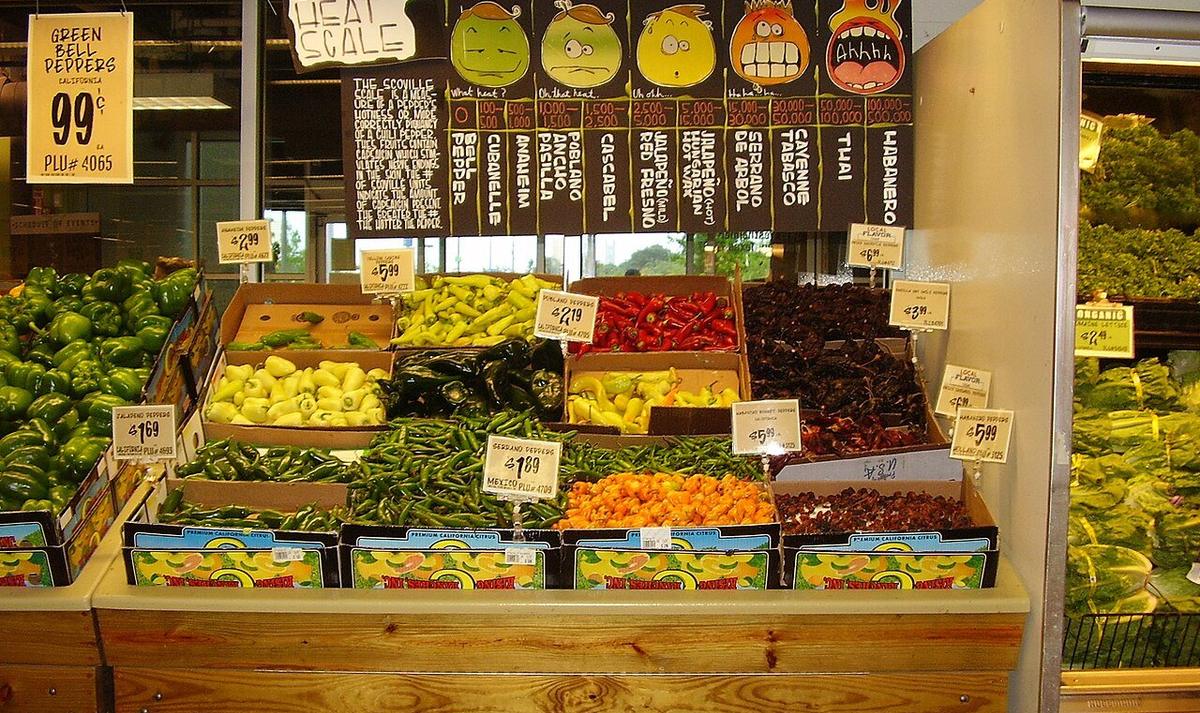
Lawsuit details — plaintiff, venue, filing date, the burrito bowl, the bloodstream infection and the three-day hospitalisation — per news reporting of the filing, 5–6 August 2026. The product liability principle described is a general summary of US law, varies by state, and is not legal advice; nothing in this case has been determined by a court. Outbreak figures, the jalapeño removal and the Minnesota Department of Health supply-chain framing per Bloomberg, CBS News, NBC News, CNBC, Forbes and FOX 9, 4 August 2026. Symptom, onset and duration guidance per the CDC and Mayo Clinic. An investigation is ongoing and a definitive source had not been confirmed at the time of writing. General information, not medical advice. Photo: a grocery pepper display (public domain).