
Almost every explanation of measles starts with the rash. That is exactly backwards, and it is the reason measles spreads through places like a theme park in the first place.
The Eight-Day Window — and Why the First Half Is the Dangerous One
A person with measles is contagious from four days before the rash appears until four days after it appears.
Read that first half again. For four full days, somebody can be spreading measles to everyone around them while having no rash whatsoever. What they have is a fever, a cough, a runny nose and red, watery eyes.
By the time the rash makes it obvious, half the contagious period is already behind them.
The Timeline, Day by Day
| After exposure | What usually happens |
| Days 1–6 | Nothing. No symptoms, not contagious yet. |
| Days 7–10 | Fever begins — usually with cough, runny nose and red watery eyes. This is where the contagious period starts. |
| A few days later | Tiny white spots may appear inside the mouth (Koplik spots). |
| Days 10–14 | The rash appears, typically starting at the hairline and spreading downward. |
| 4 days after the rash | Contagious period ends. |
| Days 7–21 | The full outer range. This is why health departments set long monitoring windows. |
That last row explains the dates in every exposure notice you read. A health department cannot say “you are fine after ten days”, because a small number of people develop symptoms as late as day 21.
“Am I Immune If I Was Vaccinated?”
Mostly, and by a wide margin.
- Two doses of MMR: about 97% effective at preventing measles.
- One dose: about 93% effective.
- Previous measles infection: considered protective.
The CDC also treats people born in the United States before 1957 as presumptively immune, because measles was so widespread before the vaccine that almost everyone caught it as a child.
Note the wording health officials use, though: vaccinated people are likely protected but are still asked to watch for symptoms. Ninety-seven per cent is very good. It is not a hundred.
Do I Need a Booster?
If you have two documented MMR doses, there is no routine booster recommendation — two doses is the full course, and it is considered lasting protection.
The people who may need a dose are the ones who never completed the course, or who cannot find any record of it. If your vaccination status is genuinely unknown, that is a conversation with your doctor or your local health department, and it is worth having before an outbreak reaches you rather than during one.
The Universal Studios Exposure: What Was Actually Said
The Los Angeles County Department of Public Health said a person with measles visited Universal Studios Hollywood and that anyone there between 10am and 9pm on Sunday 26 July may have been exposed.
Those visitors were asked to monitor themselves for symptoms through 16 August — which is simply the 21-day outer limit counted forward from the exposure date.
People who are unvaccinated or whose vaccination status is unknown are at the greatest risk.
Two Hours in an Empty Room
The detail that surprises people most: measles does not need the infected person to still be there.
The virus spreads through the air when someone breathes, talks, coughs or sneezes, and it can remain infectious in the air and on surfaces for up to two hours after that person has walked out. You can be exposed in a room you entered alone.
This is why measles is treated so differently from most illnesses in public health terms, and why a single case in a busy venue produces a notice covering an eleven-hour window rather than a specific ride or restaurant.
What to Do If You Were There
- Check your vaccination status. Two documented MMR doses puts you in a very strong position.
- Watch for fever, cough, runny nose, red eyes or a rash through the monitoring window.
- If symptoms appear, stay home — away from school, work and public gatherings.
- Telephone first. Call your doctor, clinic or health department before going in, so they can arrange to see you without putting you in a shared waiting area.
Frequently Asked Questions (FAQ)
How long is measles contagious?
From four days before the rash appears until four days after — an eight-day window, half of it before any rash is visible.
Am I immune to measles if I was vaccinated?
Two MMR doses are about 97% effective and one dose about 93%. Health officials still advise vaccinated people to watch for symptoms after a known exposure.
How long after exposure do measles symptoms start?
Fever usually begins 7–10 days after exposure and the rash 10–14 days after, with a full range of 7 to 21 days.
Can you catch measles from an empty room?
Yes. The virus can stay infectious in the air and on surfaces for up to two hours after an infected person leaves.
What should I do if I was exposed to measles?
Check your MMR record, watch for symptoms through the monitoring window, stay home if any appear, and call ahead before visiting a clinic or emergency room.
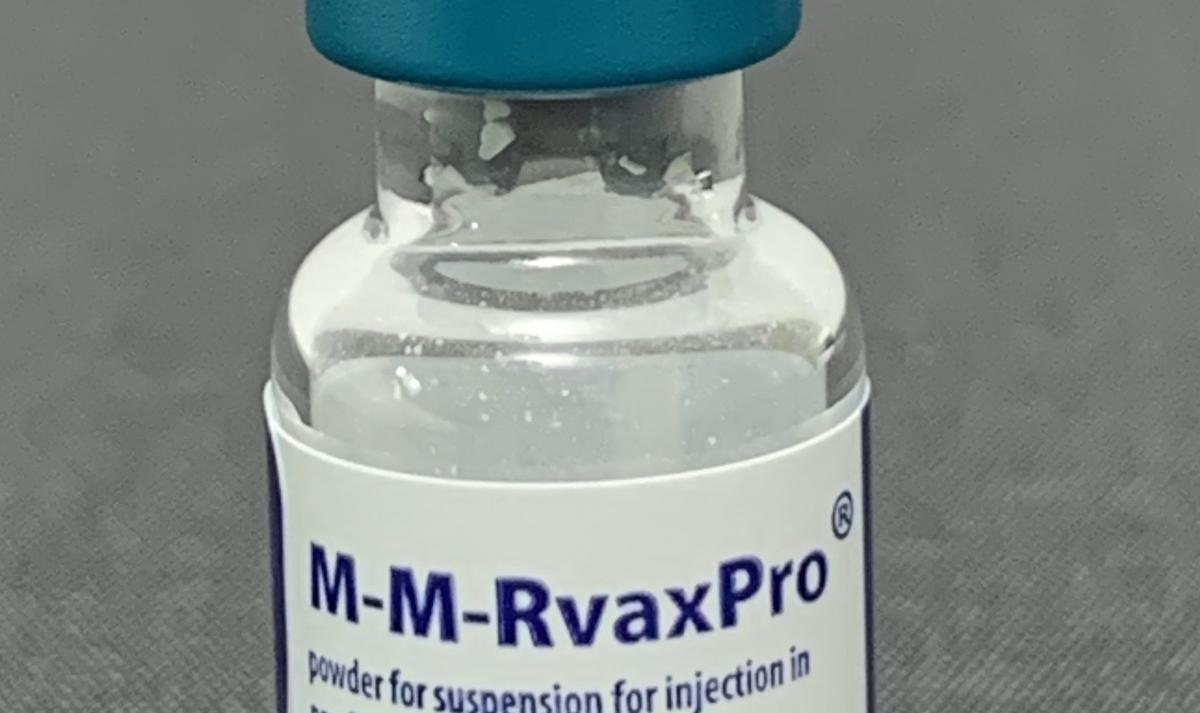
Contagious period, two-hour airborne survival, incubation ranges and MMR effectiveness figures per the US Centers for Disease Control and Prevention. Exposure location, time window and the 16 August monitoring date per the Los Angeles County Department of Public Health, August 2026. This is general information and not medical advice — for your own situation, contact your doctor or your local health department. Photo: a vial of MMR vaccine by Whispyhistory, CC BY-SA 4.0 via Wikimedia Commons, cropped.