
An air quality alert is the single most commonly issued weather-service alert in the United States on a normal summer day — more common than heat warnings, more common than flood watches. Almost nobody can tell you what the number attached to it means.
The Six Bands
| AQI | Category | What it means |
|---|---|---|
| 0–50 | Good (green) | Air quality is satisfactory; little or no risk |
| 51–100 | Moderate (yellow) | Acceptable, but a risk for people unusually sensitive to air pollution |
| 101–150 | Unhealthy for Sensitive Groups (orange) | Members of sensitive groups may experience health effects |
| 151–200 | Unhealthy (red) | Some of the general public may be affected; sensitive groups more seriously |
| 201–300 | Very Unhealthy (purple) | Health alert — risk is increased for everyone |
| 301+ | Hazardous (maroon) | Health warning of emergency conditions |
The Orange Problem
Most air quality alerts are issued in the orange band. And orange has a naming problem: “Unhealthy for Sensitive Groups” reads like a warning aimed at someone frail and elsewhere.
Children are not a marginal case here. They breathe faster relative to body size, spend more time outdoors, and their lungs are still developing.
The Number Is Not a Pollution Reading
This trips people up. An AQI of 150 is not “150 units of smoke”. The EPA takes measured pollutant levels and converts them onto a 0–300+ health scale built around national air quality standards.
That is why the scale is worth learning once: the number already carries the health judgement. You do not need to know what a microgram of PM2.5 does to a lung — the conversion has done it for you.
The One Line That Explains the Whole Scale
From the EPA’s own AirNow: “When AQI values are above 100, air quality is unhealthy: at first for certain sensitive groups of people, then for everyone as AQI values get higher.”
100 is the line. Below it, satisfactory. Above it, the only question is how many people it is now unhealthy for.
What to Actually Do
- Orange (101–150): if you or a family member is in a sensitive group, cut back on prolonged or heavy outdoor exertion. Everyone else can carry on with sense.
- Red (151–200): everybody should reduce prolonged outdoor exertion. Move the run indoors.
- Purple (201–300): avoid outdoor exertion. Keep windows shut; run air conditioning on recirculate if you have it.
- Maroon (301+): stay indoors. This is the emergency band.
One practical note: exercise makes bad air worse for you, because you breathe harder and deeper. A red-band jog puts more pollutant into your lungs than a red-band walk.
Frequently Asked Questions (FAQ)
What does AQI mean?
Air Quality Index — a 0 to 300+ health scale the EPA converts pollutant levels onto, in six colour-coded bands.
What AQI is unhealthy?
Above 100. First for sensitive groups (orange, 101–150), then for everyone as it climbs.
Who counts as a sensitive group?
Children, older adults, and people with lung or heart conditions, including asthma.
What do the colours mean?
Green good, yellow moderate, orange unhealthy for sensitive groups, red unhealthy, purple very unhealthy, maroon hazardous.
Can I exercise outside when air quality is bad?
Exercise makes it worse — harder breathing draws more pollutant in. From red upward, move it indoors.
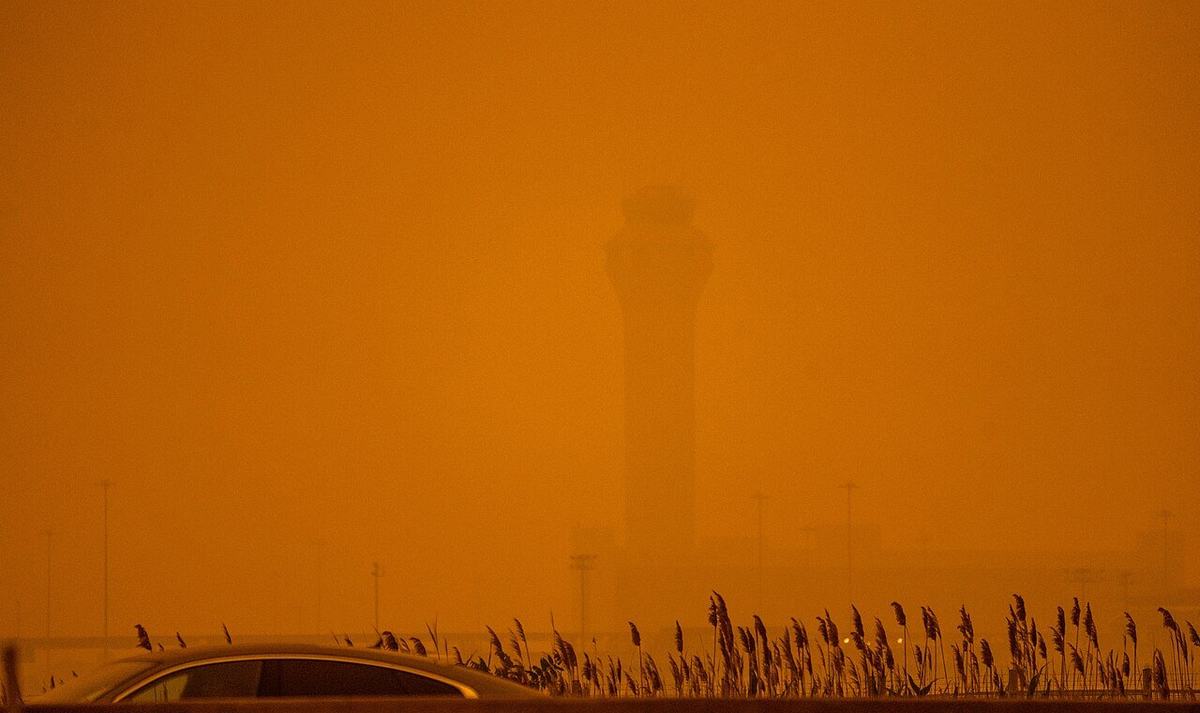
AQI categories, ranges, colours and the quoted description per the EPA’s AirNow (airnow.gov) AQI Basics, with supporting detail from EPA guidance and Britannica, 2026. Sensitive-group definition per EPA. Live alert counts observed from the National Weather Service active-alerts feed on 5 August 2026. General information, not medical advice. Photo: wildfire smoke over the New York and New Jersey area, June 2023 (CC BY 2.0, Wikimedia Commons).