
People see the phrase and assume the National Weather Service is warning them about a fire. It is not. There may be no fire anywhere in the warned area.
What the NWS is warning about is the weather — a combination that would take an ordinary spark and turn it into something nobody can catch.
Fire Weather Watch vs Red Flag Warning
This is the pair that trips everybody up, and it follows exactly the same logic as flood and severe-storm alerts: a watch means it could happen; a warning means it is happening or about to.
| Fire Weather Watch | Red Flag Warning | |
| What it means | High potential for the conditions to develop | High confidence they will occur — or they are occurring now |
| Lead time | 12–72 hours ahead | Within 24–48 hours, or already met |
| What to do | Plan. Move the burning, the mowing, the welding. | Act. No ignition sources at all. |
There Is No National Threshold — and That Is Deliberate
Here is the part almost no coverage mentions. There is no single set of numbers that triggers a Red Flag Warning across the United States.
Criteria are set regionally, and they differ because the land differs. Terrain and vegetation change how fast fire moves, so the humidity that is unremarkable in one state is dangerous in another. California alone uses several different sets of criteria within its own borders.
| Area | Example criteria |
| A common baseline | sustained wind ≥15 mph, humidity ≤25%, temperature >75°F |
| NWS Denver/Boulder | frequent gusts ≥25 mph, humidity ≤15% |
| Oklahoma & Texas Panhandles | humidity ≤15%, 20-foot winds ≥20 mph |
| NWS Eastern region | winds sustained or gusting >25 mph, humidity <30% |
Look at the humidity column. 15% in Denver. 30% in the East. The same reading that means nothing in Colorado is a Red Flag day in New York, because eastern fuels are used to being damp and dry out fast when they are not.
The Three Ingredients
- Wind — the one that matters most. It supplies oxygen, pushes the flame front, and throws embers ahead of the fire to start new ones.
- Low humidity — dry air pulls moisture out of grass, brush and dead wood, sometimes within hours.
- Dry fuel — the cured grass and dead vegetation already on the ground. This is why a Red Flag Warning can follow weeks after the last rain rather than during a heatwave.
Heat is usually in the mix, but it is not the headline. A cool, windy, bone-dry day is far more dangerous than a hot, still, humid one.
Can You Have a Fire During a Red Flag Warning?
A Red Flag Warning is a forecast product, not a law. On its own it does not ban anything.
In practice, though, many counties, fire districts and land agencies tie their own restrictions to it — burn bans, permit suspensions and campfire prohibitions that switch on automatically when a warning is issued. So the honest answer is: the warning itself does not make it illegal, but in a great many places something else does, and you have to check locally.
The practical guidance is simpler than the legal position: do not.
The Ignition Sources Nobody Thinks About
Most people hear “no fires” and think of campfires and barbecues. Those are the easy ones. The ones that actually start fires on Red Flag days are duller:
- Dragging trailer chains throwing sparks off the road surface.
- Mowing or strimming dry grass — a blade striking a stone is a spark straight into fuel.
- Parking a hot vehicle on dry grass. A catalytic converter runs far hotter than grass needs.
- Grinding, welding or cutting metal outdoors.
- Discarded cigarettes, and embers from a fire you believed was out.
How Many Are Active Right Now?
At the time of writing, the National Weather Service had 12 Red Flag Warnings and 7 Fire Weather Watches in force nationally — alongside 47 Heat Advisories and 41 Air Quality Alerts.
You can check the live national list yourself at weather.gov, which publishes every active alert in the country.
Frequently Asked Questions (FAQ)
What is a red flag warning?
A National Weather Service alert that weather conditions — wind, low humidity and dry fuels — will make any fire that starts spread rapidly. It does not mean a fire exists.
What is the difference between a fire weather watch and a red flag warning?
A watch flags high potential 12–72 hours ahead. A warning means the conditions are expected within 24–48 hours or are already occurring.
What humidity triggers a red flag warning?
It depends where you are. 15% in Denver, 30% in the NWS Eastern region — each office sets thresholds for its own terrain and vegetation.
Can you have a fire during a red flag warning?
The warning itself is a forecast, not a ban — but many local jurisdictions trigger burn restrictions off it automatically. Check locally, and in practice do not burn.
Does a red flag warning mean a wildfire is happening?
No. It describes the weather, not a fire. There may be no fire anywhere in the warned area.
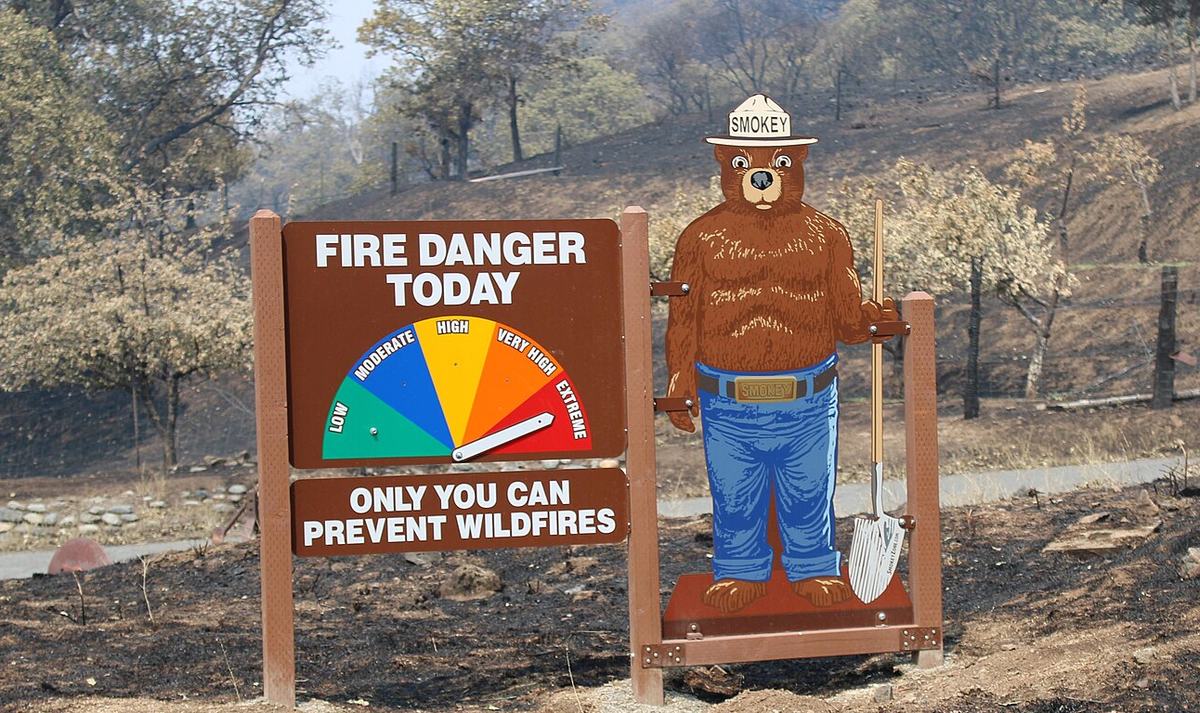
Watch and warning definitions, lead times and the regional criteria examples per the National Weather Service. Active alert counts taken from the NWS active-alerts feed on 6 August 2026 and change continuously — check weather.gov for the current list. Local burn restrictions are set by counties, fire districts and land agencies, not by the NWS. Photo: a Fire Danger Rating sign near Klamath, California (US Forest Service, public domain), cropped.