
Every August the signs go up at the pharmacy counter, and every August a lot of people get their flu shot the moment they see one, on the reasonable assumption that being early cannot hurt.
It can.
The Window Is Narrower Than the Supply
The vaccine is available long before the point at which taking it makes the most sense. The recommended window is mid-September through October, with the goal of being vaccinated by the end of October.
That is not a supply-management convenience. It is arithmetic about when protection is at its strongest versus when flu actually arrives.
The Arithmetic
| Stage | Timing |
| Vaccine becomes fully effective | About 2 weeks after the shot |
| Protection begins to fade | From roughly six weeks onward |
| Rate of decline in adults | About 9% every four weeks |
| When flu actually peaks | December to February |
Put those rows next to each other and the guidance explains itself. A shot in mid-July has to hold its protection through August, September, October and November before it faces the month it was bought for.
A shot at the start of October has barely started fading when flu arrives.
If You Are 65 or Over, This Matters More
Two things stack up in the same direction for older adults.
- Protection fades faster. The waning that affects everyone is steeper in this age group.
- The consequences are worse. Flu carries substantially higher risk of serious illness after 65.
Which is why the advice for this group is not merely “September is better” but specifically do not get vaccinated in July or August.
Who Should Go Early Anyway
The “not too early” rule has exceptions, and they are the opposite of intuitive — the people who need protection most are sometimes the ones told to go sooner.
- Children who need two doses. Some children require a second dose at least four weeks after the first. Starting in August gives time to complete the course before flu arrives.
- Pregnancy in the third trimester. Vaccination passes antibodies to the baby, who cannot be vaccinated in the first six months of life. The timing is chosen for the infant’s benefit, not the parent’s.
If either applies to you, your provider’s advice on timing overrides the general rule.
Is It Ever Too Late?
No — and this is the more common mistake. People who miss October often decide the moment has passed and skip the year entirely.
Flu circulates into spring. A vaccination in December or January still protects through the back half of the season. Late is worth far more than never.
Flu Shot and COVID Vaccine Together?
Yes. They can be given at the same visit, usually in different arms. There is no requirement to space them out.
The practical argument for doing both at once is simply that people who plan a second trip often do not make it.
Why Every Single Year?
Two reasons, and both are needed to explain it.
First, the virus changes, and the vaccine is reformulated each year to match the strains expected to circulate. Second, your own protection wanes — the same fade that makes timing matter within a season means last year’s shot is not carrying you through this one.
Frequently Asked Questions (FAQ)
When should I get my flu shot?
Mid-September through October, aiming to be vaccinated by the end of October.
Is it too early to get a flu shot in August?
For most adults, yes — and people 65 and over are specifically advised against July or August vaccination because protection fades before flu peaks.
How long does the flu shot last?
It takes about two weeks to take full effect, then protection declines gradually — studies suggest by roughly 9% every four weeks in adults, starting around six weeks in.
Can you get the flu shot and COVID vaccine together?
Yes, at the same visit, usually one in each arm.
Is it too late to get a flu shot in December?
No. Flu circulates into spring, so a December or January shot still protects through the rest of the season.
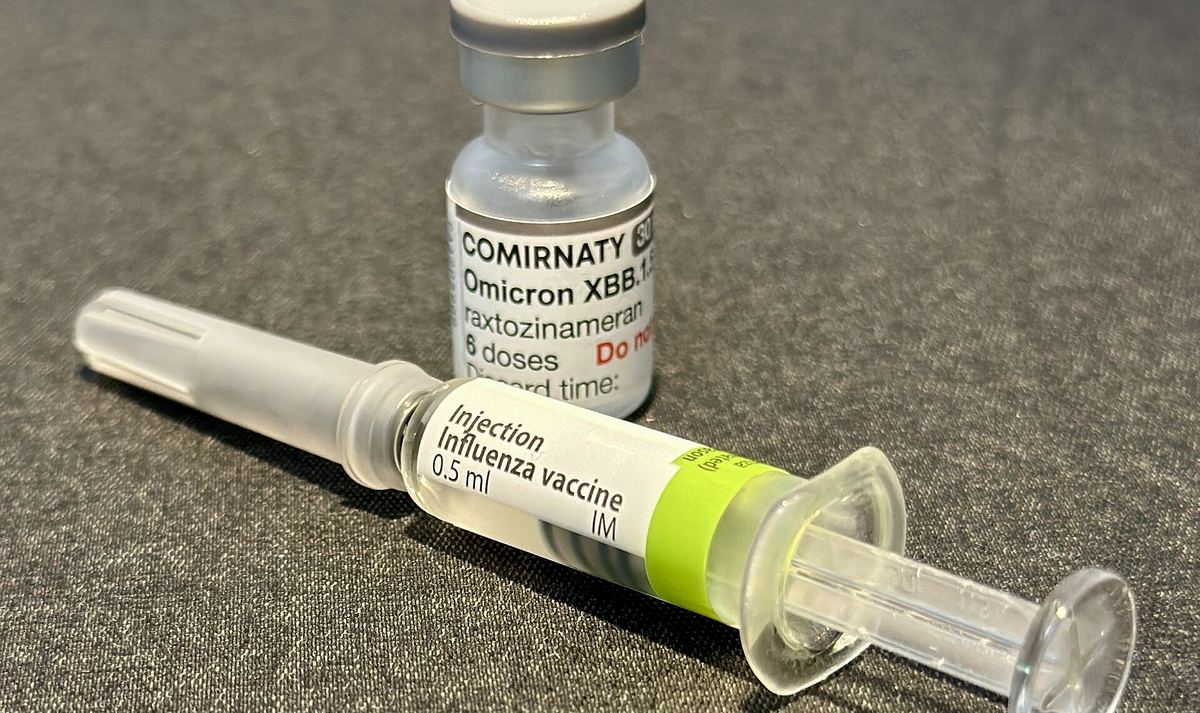
Recommended vaccination window, guidance against July and August vaccination for adults 65 and over, the high-dose and adjuvanted recommendation, co-administration with COVID-19 vaccine and the two-week onset per the US Centers for Disease Control and Prevention. Waning-protection figures reflect published studies summarised by vaccine researchers and are averages, not individual predictions. Peak flu months per CDC surveillance. This is general information and not medical advice — timing for children needing two doses, for pregnancy, and for anyone with a medical condition should be decided with your own provider. Photo: an influenza vaccine syringe and a COVID-19 vaccine vial by Whispyhistory, CC BY-SA 4.0 via Wikimedia Commons, cropped.